
Search The Internet For The Answer...

Showing posts with label Smoke Detectors. Show all posts

Monday, January 6, 2014

Use Precaution & Common Sense Operating Heating Systems This Winter!


When we think of portable heaters, we think of convenience and energy savings. We think mostly of keeping warm through those cold winter nights! What we should also be thinking about is that heating fires are a large cause of home fires in the country and many are caused by portable heating devices.


In 2011, heating equipment was involved in an estimated 53,600 reported U.S. home structure fires, with associated losses of 400 civilian deaths, 1,520 civilian injuries, and $893 million in direct property damage. These fires accounted for 14% of all reported home fires..
Space heaters, whether portable or stationary, accounted for one-third (33%) of home heating fires and four out of five (81%) of home heating fire deaths.


The leading factor contributing to home heating fires (28%) was failure to clean, principally creosote from solid-fueled heating equipment, primarily chimneys.
More fires occur during the winter months than at any other time. Fortunately, taking simple precautions can prevent most fires.


The Tioga Fire Protection and Fire Prevention Blog recommends the following safety tips &  precautions below to help ensure your safety:

Portable Heaters
* Put at least three feet of empty space between the heater and everything else.
* Vacuum and clean the dust and lint from all heaters.
* If the cord gets hot, frayed or cracked, have the heater serviced.
* Never use extension cords with portable electric heaters.
* Turn off portable heaters when leaving or sleeping.
* An adult should always be present when anyone is using a space heater around children.
* Make sure your portable electric heater is UL approved and has a tip-over shut off function.


Woodstove and Fireplace Safety
* Have a certified chimney sweep clean and inspect your fireplace.
* Place ashes outdoors in a covered metal container at least three feet away from anything that burns.
* To prevent flue fires, burn dry, well-seasoned wood.
* Always use a fireplace screen made of sturdy metal or heat-tempered glass. If children are present, use a special child-guard screen.

Generators
Carbon monoxide (CO) is an invisible killer. You cannot see or smell it. A generator's exhaust contains poisonous CO, which can kill you in a matter of minutes. Follow these important generator safety tips:
* Never use a portable generator inside a home, garage, shed or other partially enclosed space, even if doors and windows are open.
* Place portable generators outside only, far away from the home. Keep the generator away from openings to the home, including doors, windows, and vents.
* Read the label on the generator and the owner's manual, and follow the instructions.
* Install CO alarms with battery backup in the home outside each sleeping area.
* Get to fresh air immediately if you start to feel sick, weak or dizzy. CO poisoning from exposure to generator exhaust can quickly lead to incapacitation and death.
* Be sure generator fuel is properly and safely stored.
* Always refuel the generator outdoors and away from any ignition sources.
* If you choose to have a generator permanently connected to your home's electrical system, make sure a licensed electrician installs it and be sure to notify your electric company.

Candles
* Place candles in sturdy, fireproof candleholders where they cannot be knocked over.
* Make sure all candles are out before going to bed or leaving the house.
* Keep candles, matches, and lighters out of children's reach.
* Keep candles away from Christmas trees, evergreen clippings, decorations, presents, and wrapping paper.


Smoke Detectors and Alarms
* Install smoke alarms outside each sleeping area and in each bedroom.
* Test (monthly) and vacuum your smoke alarms each month to make sure they are working.
* Smoke alarms 10 years old or older need to be replaced with new units.


Home Escape Plans
* Know two ways out of every room.
* Practice your escape plan with your whole family at least twice a year.
* Do not attempt to go back into a burning home.


For additional tips from the National Fire Protection Association: http://www.nfpa.org/safety-information/for-consumers/holidays/put-a-freeze-on-winter-fires


(The usual disclaimers: I am not a journalist; This is a blog that expresses an outlook and is not conclusive in any shape or manner.)


Thursday, October 10, 2013

Putting A Lid On Cooking Fires - FPW 2013


Kitchen fires due to cooking oil or grease igniting into flames cause the fastest-spreading and most destructive type of residential fire. It's a statistic that may be surprising: two out of every five fires start in the kitchen.

In hopes of stomping out the growing trend, National Fire Prevention Week is focusing on the kitchen.

It is hope that people won’t have to learn the hard way. If just one fire warning could be given, it could be, “Keep an eye on what you fry!”


Why? Because cooking is the leading cause of home fires, according to the National Fire Protection Association (NFPA). The latest statistics from NFPA say U.S. Fire Departments responded to an estimated annual average of 156,600 cooking-related fires between 2007 and 2011.

This year’s Fire Prevention Week theme is “Prevent Kitchen Fires,” a reminder that leaving cooking unattended and other unsafe kitchen practices are a recipe for disaster.

Often when the local fire departments & firefighters are called to a cooking-related fire, the residents usally tells them that they only left the kitchen for a few minutes. Sadly, that’s all it takes for a dangerous fire to start. The bottom line is that there’s really no safe period of time for the cook to step away from a hot stove.

Some key points to remember:

• Stay in the kitchen when you are frying, grilling, or broiling food. If you must leave the room even for a short period of time, turn off the stove.

• When you are simmering, baking, or roasting food, check it regularly, stay in the home, and use a timer to remind you.

• Keep cooking areas clean and clear of combustibles (e.g. potholders, towels, rags, drapes, and food packaging).

• Keep children away from cooking areas by enforcing a “kid-free zone” of three feet around the stove.

• If you have a fire in your microwave, turn it off immediately and keep the door closed. Never open the door until the fire is completely out. If in doubt, get out of the home and call the fire department.

• Always keep an oven mitt and a lid nearby. If a small grease fire starts in a pan, smother the flames by carefully sliding the lid over the pan. (Make sure you are wearing the oven mitt.) Turn off the burner. Do not move the pan. To keep the fire from restarting, do not remove the lid until it is completely cool.

• Never pour water on a grease fire. If the fire does not go out, get out of the home and call the fire department.

• If an oven fire starts, turn off the heat and keep the door closed. If the fire does not go out, get out of the home and call the fire department.

A cooking fire can quickly turn deadly. Firefighters have seen too many homes destroyed and people killed or injured by fires that could have been easily avoided.

“Prevent Kitchen Fires!” 


(The usual disclaimers: I am not a journalist; this is a blog that expresses an outlook and is not conclusive in any shape or manner.)


Tuesday, October 8, 2013

Fire Prevention Week Focus on Kitchen Fire Safety Awareness


Oct. 6-12 is National Fire Prevention week, and this year's message is focused on preventing kitchen fires. More fires start in the kitchen than in any other part of the home and teaching residents how to keep cooking fires from starting in the first place is a key goal, according to the National Fire Protection Association (NFPA).

The Tioga Fire Protection and Fire Prevention blog reminds the public to be aware of fire dangers in the kitchen.


According to the nonprofit National Fire Protection Association (NFPA), two out of every five home fires and most home fire-related injuries are caused by unattended cooking,

Suggested are the following  family safety checklist and Fire Safety tips that will  help prevent a fire from starting in the kitchen or at home:

- Be alert! If you are sleepy or have consumed alcohol don’t use the stove or stovetop.

- Stay in the kitchen when you are frying, grilling, broiling, or boiling food. Keep an eye on what you fry! Stay in the kitchen while you are frying, grilling, or broiling food. If you leave the kitchen for even a short period of time, turn off the stove.

- If you must leave the room, even for a short period of time, turn off the stove.

- When you are simmering, baking, or roasting food, check it regularly, stay in the home, and while food is cooking, and use a timer to remind you that you are cooking. 

- Have a "kid-free zone" of at least 3 feet around the stove by keeping children and pets away from the stove and areas where hot food or drink is prepared or carried. Use the stove's back burners whenever possible.

- When you cook, wear clothing with tight-fitting sleeves.

- Keep anything that can catch fire like potholders, oven mitts, wooden utensils, paper and plastic bags, towels, and anything else that can burn, away from your stovetop.

- Clean up food and grease from burners and stovetops.

National Fire Prevention Week lasts from Oct. 6 through Oct. 12.

"Prevent Kitchen Fires.”


(The usual disclaimers: I am not a journalist; this is a blog that expresses an outlook and is not conclusive in any shape or manner.)


Monday, October 7, 2013

This Week Is Fire Prevention Week 2013


Kitchen accidents focus of National Fire Prevention Week
It's National Fire Prevention Week throughout the country. This year's theme is "Preventing Kitchen Fires."

Be alert, stay in the kitchen and keep flammable items away from the stovetop-these cooking safety tips may seem like common sense but cooking fires are the leading cause of home fires and home injuries in the U.S..

"U.S. fire departments responded to an estimated annual average of 156,600 cooking-related fires between 2007-2011, resulting in 400 civilian deaths, 5,080 civilian injuries and $853 million in direct damage," according to the National Fire Protection Association.

Out of those cooking-related fires, unattended cooking was a factor in 34 percent of home cooking fires.

Because of those statistics, from Oct. 6 to Oct. 12 firefighters across the U.S. are taking the time to remind the public about how to prevent kitchen fires during the 88th annual National Fire Protection Association's Fire Prevention Week.


Cook with caution!

Stay in the kitchen while you are frying, grilling or broiling food. If you leave the kitchen for even a short period of time, turn off the stove.

If you have a cooking fire...

Just get out! When you leave, close the door behind you to help contain the fire

Call 911 after you leave.

video platformvideo managementvideo solutionsvideo player

For additional Fire Prevention Week information concerning & "Preventing Kitchen Fires"...  

... Download a flyer of these NFPA safety tips on cooking

Fire Prevention Week is the longest running public health and safety observance on record. The President of the United States has signed a proclamation proclaiming a national observance during that week every year since 1925, according to the National Archives and Records.


(The usual disclaimers: I am not a journalist; this is a blog that expresses an outlook and is not conclusive in any shape or manner.)


Friday, March 8, 2013

Time To Turn The Clocks One Hour Ahead!


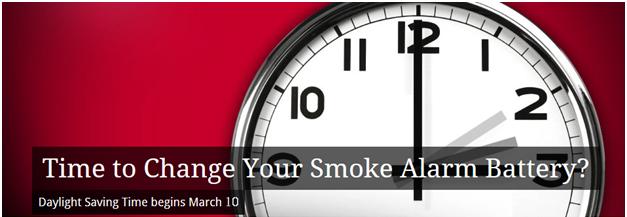
It's almost time to spring ahead, which means it's also time to test and replace the batteries in your smoke detectors. Daylight Saving Time starts at 2 a.m. Sunday, March 10.

Is your smoke alarm still working? Smoke alarms must be maintained! A smoke alarm with a dead or missing battery is the same as having no smoke alarm at all.

Tioga Fire Protection and Fire Prevention would like to remind everyone to not only set their clocks ahead this weekend, but to also test your smoke detector batteries and change them if necessary.

A smoke alarm only works when it is properly installed and maintained. Depending on how your smoke alarm is powered (9-volt, 10-year lithium, or hardwired), you’ll have to maintain it according to manufacturer’s instructions.

Tioga Fire Protection and Fire Prevention says even hard-wired smoke alarms should have their batteries replaced and tested monthly.

A working smoke alarm doubles your chance of survival during a fire by giving you the critical time needed to escape.

A lot of fires occur at night while most people are sleeping.

Actually, the smoke and toxic gases from the fire can cause you to fall into a deeper sleep, diminishing the chance of survival.

Tioga Fire Protection and Fire Prevention recommends changing the batteries every six months and testing them monthly.


General guidelines for smoke alarm maintenance:

Smoke alarm powered by a 9-volt battery
•Test the alarm monthly.
•Replace the batteries at least once per year.
•The entire smoke alarm unit should be replaced every 8-10 years.

Smoke alarm powered by a 10-year lithium (or “long life”) battery
•Test the alarm monthly.
•Since you cannot (and should not) replace the lithium battery, the entire smoke alarm unit should be replaced according to manufacturer’s instructions.

Smoke alarm that is hardwired into the home’s electrical system
•Test the alarm monthly.
•The backup battery should be replaced at least once per year.
•The entire smoke alarm unit should be replaced every 8-10 years.


A Sound You Can Live With: Test Your Smoke Detector!


(The usual disclaimers: I am not a journalist; This is a blog that expresses an outlook and is not conclusive in any shape or manner.)


Monday, January 14, 2013

December, January, February peak months for heating fires...


While a warm home and a hot meal on a cold winter’s day may conjure up thoughts of safety and security, the unfortunate reality is that winter is the leading time of year for home fires in the United States. That’s why the National Fire Protection Association (NFPA) and the U.S. Fire Administration (USFA) have teamed up to help prevent home fires in the winter months.

According to the U.S. Fire Administration and National Fire Protection Association (NFPA there are more house fires during the winter than any other season.

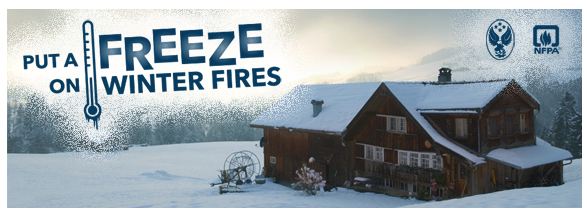
Through a jointly sponsored initiative – Put a Freeze on Winter Fires – NFPA and USFA are working collaboratively to tell the public about ways to stay fire-safe this winter. The effort targets home heating and cooking, which represent the two leading causes of U.S. home fires. Both types of fires peak in the winter months.

“The use of heating equipment largely contributes to the peak in U.S. home fires during the winter months,” said Lorraine Carli, vice president of communications at the National Fire Protection Association (NFPA).

The USFA reports that nationally, on average, winter residential fires result in an estimated 945 deaths, 3,800 injuries and $1.7 billion in property damage. However, the USFA said there are simple things you can do for these next few, cold months to maintain a fire-safe home.

It said winter fires happen more often mostly because of an increase in cooking and heating fires, and winter storms that knock out power cause people to turn to alternative heating sources, raising their risk.


Winter Fire Safety


According to NFPA’s most recent report, “Home Fires Involving Heating Equipment,” home heating equipment was involved in an estimated 57,100 reported home structure fires, 490 civilian deaths, 1,530 civilian injuries, and $1.1 billion in direct property damage in 2010.

Stationary and portable space heaters accounted for one-third (32 percent) of reported home heating fires, but 80 percent of the home heating fire deaths, two-thirds (67 percent) of associated civilian injuries, and half (52 percent) of associated direct property damage.

“Space heaters clearly present the greatest risk of home heating fires,” said Carli. “No matter what type of heating system people may use, we can all reduce our risk by taking simple safety precautions.”

Below are tips for safely heating your home this winter: 

* All heaters need space. Keep anything that can burn at least three feet away from heating equipment, like the furnace, fireplace, wood stove, or portable space heater. 

* Have a three-foot “kid-free zone” around open fires and space heaters.

* Never use your oven to heat your home.

* Have a qualified professional install stationary space heating equipment, water heaters or central heating equipment according to the local codes and manufacturer’s instructions.

*Have heating equipment and chimneys inspected and cleaned each year by a qualified professional.

* Remember to turn portable heaters off when leaving the room or going to bed.

* Always use the right kind of fuel, specified by the manufacturer, for fuel-burning space heaters.

* Make sure the fireplace has a sturdy screen to stop sparks from flying into the room. Ashes should be cool before putting them in a metal container. Keep the container a safe distance away from your home.

*Test all smoke alarms monthly and replace the batteries once a year, or when they begin to chirp, which means the batteries are running low.

* Install carbon monoxide (CO) alarms outside each sleeping area and on every level of the home. Test the alarms monthly.

For more winter fire safety tips from the USFA: http://www.usfa.fema.gov/citizens/home_fire_prev/holiday-seasonal/winter.shtm

For additional tips from the National Fire Protection Association: http://www.nfpa.org/categoryList.asp?categoryID=2103&URL=Safety%20Information/For%20consumers/Holidays/

Checklist for safely preparing for the heating season: http://www.nfpa.org/assets/files//Public%20Education/Top10WinterFreezeTips.pdf 


(The usual disclaimers: I am not a journalist; This is a blog that expresses an outlook and is not conclusive in any shape or manner.)


Thursday, June 14, 2012

Focusing on Having Two Ways Out


National Fire Protection Association focuses on Having Two Ways Out during Fire Prevention Week in October 

2012 theme highlights the importance of fire escape planning and practice 

Click to tweet: Have Two Ways Out! Join @NFPA in spreading importance of fire escape planning and practice http://tinyurl.com/25rdvy9  

The National Fire Protection Association (NFPA) announced the 2012 Fire Prevention Week theme as “Have Two Ways Out!” to encourage families across the country to prioritize fire escape planning and practice. From October 7-13, 2012, NFPA blazes the trail for home fire safety and leads the campaign tohave a home fire escape plan that prepares families to think fast and get out quickly when the smoke alarm sounds. If one exit is blocked by smoke, it’s imperative to plan for another escape outlet.

“We are excited for this year’s theme because it is simple and to the point—always plan for two ways out of your home,” says Jim Shannon, president of NFPA. “You never know which direction a fire will come from, and being prepared can save the lives of you and your loved ones.”


To coincide with this year’s Fire Prevention Week theme, NFPA gives practical fire safety tips to families:
  • Make a map of your home; mark a door and window that can be used to get out of every room.
  • Choose a meeting place outside in front of your home.
  • Have a grown-up sound the smoke alarm and practice your escape plan.
  • Practice your escape plan twice a year.
To further spread the word about fire safety during Fire Prevention Week, Sparky the Fire Dog kicks off Sparky’s Wish List. The Wish List encourages neighborhoods to partner together to build fire-safe communities and provides a tangible way for media, local businesses and the general public to get involved with Fire Prevention Week. In the online registry, fire departments create wish lists of fire safety materials needed for school visits, bringing fire departments and community members together to support life-saving programs.

About the National Fire Protection Association (NFPA)NFPA is a worldwide leader in fire, electrical, building, and life safety. The mission of the international nonprofit organization founded in 1896 is to reduce the worldwide burden of fire and other hazards on the quality of life by providing and advocating consensus codes and standards, research, training, and education.


(The usual disclaimers: I am not a journalist; This is a blog that expresses an outlook and is not conclusive in any shape or manner.)


Tuesday, May 1, 2012

2012's Fire Prevention Week Theme...


2012 FPW

 Fire Prevention Week for 2012 will be held October 7th - 13th, and it's theme this for this year is "Have 2 ways out!"

In 2008, home fires killed 2,755 people and injured 13,160. Two of every five home fire deaths were in a home with no smoke alarms and another one in five was in a home where the smoke alarms were not working.

The reality is that when fire strikes, your home could be engulfed in smoke and flames in just a few minutes. 


How to Make a Fire Safety Plan -- powered by ehow


This year's theme aims to educate how it is important to have a home fire escape plan that prepares your family to think fast and get out quickly when the smoke alarm sounds. What if your first escape route is blocked by smoke or flames? That's why having two ways out is such a key part of your plan.

Having working smoke alarms can cut the chances of dying in a fire in half.

The theme will also focus on how to choose, install, and maintain smoke alarms.

NFPA has taken the lead in public fire safety outreach by serving as the official sponsor of Fire Prevention Week for 88 years.


The annual public awareness and safety commemoration, which is proclaimed by the President of the United States each year, is observed by fire departments in the U.S. and Canada to mark the anniversary of the Great Chicago Fire that occurred on October 8th 1871.

According to the National Archives and Records Administration's Library Information Center, Fire Prevention Week is the longest running public health and safety observance on record.

Fire Prevention Week is held every year durint the week of October 9th.

This year’s theme,“Have 2 Ways Out!”, focuses on the importance of fire escape planning and practice.


(The usual disclaimers: I am not a journalist; This is a blog that expresses an outlook and is not conclusive in any shape or manner.)


Sunday, March 11, 2012

Daylight Saving Time Is Here!


Ok now, I added an hour last night before going to bed for the arrival of Day Light Savings Time here in up-state New York. Is changing the clock worth all the fuss? Good question for discussion and in the following YouTube video explains what adding that hour all means...


We're only saving $4.00 a year per household by doing the Day Light Saving Time Thing! Wow! Well...the thing is though...I do know checking and test smoke detectors and CO2 alarms and changing their batteries with new/fresh ones is worth it because these early warning systems could and have saved lives!


Now is the time to check your skoke alarms and CO2 detectors. It is encouraged to make sure your smoke detectors and CO2 alarms are operating properly by changing the batteries at least once a year. Like now, change those batteries with new one! The best way to make sure the device is working is to push the “test” button until the alarm sounds. Test monthly throughout the year.

Smoke detectors that are properly installed and maintained play a vital role in reducing fire deaths and injuries. In addition, families should prepare an emergency escape plan to allow all members to practice what they should do and where they should meet outside the home in the event of a fire.

Here are a few more YouTube videos explaining where to install smoke alarms/detectors, as well as how to perform a monthly smoke detector test...


Here are some easy fire safety tips to remember and use throughout the year:

Safety tips provided by FASNY & National Fire Protection Association:

• Test smoke alarms/detectors at least once a month by using detectors’ "test button.”

• Clean the units by vacuuming or dusting in accordance with the manufacturer's instructions.

• Install new batteries in all smoke alarms/CO detectors at least once a year on the day you change your clocks in the spring and fall.

• Install a smoke alarm and CO detector near sleeping areas, as well on every level of the home, including the basement.

• Do not paint smoke alarm/CO detectors.

• Because smoke rises, alarms should be mounted high on walls or ceilings.

• Smoke alarms/CO detectors should not be installed near a window, door or forced-air register where drafts could interfere with their operation.

• Notify your local fire department when your detector sounds. However, before calling, make sure to identify whether or not the device is simply sounding due to a low battery.

• Read the detector’s packaging and instructions to understand the difference between a true emergency and a simple maintenance issue of a dead battery or an expired detector, as the detector may emit different sounds for each situation.

• If it is a real activation, call 911 and evacuate immediately.

• To avoid potential CO exposure, do not warm a vehicle in an enclosed garage space. During and after a snowstorm, make sure all vents connected to stoves, furnaces, and fireplaces leading outside are clear.


A Sound You Can Live With: Test Your Smoke Detector!


(The usual disclaimers: I am not a journalist; This is a blog that expresses an outlook and is not conclusive in any shape or manner.)

Thursday, March 8, 2012

Change Batteries in Smoke and CO Alarms This Weekend Daylight Saving Time begins March 11


WASHINGTON, D.C. - The U.S. Consumer Product Safety Commission (CPSC) is urging consumers to replace the batteries in their smoke and carbon monoxide (CO) alarms this weekend for Daylight Saving Time. This year, Daylight Saving Time begins on Sunday, March 11. Fresh batteries allow smoke and CO alarms to do their jobs saving lives by alerting families of a fire or a buildup of deadly carbon monoxide in their homes.

CPSC estimates there was a yearly average of 386,300 residential fires resulting in nearly 2,400 deaths between 2006 and 2008.

Two-thirds of fire deaths occur in homes where there are no smoke alarms or no working smoke alarms. That is why it is important to replace batteries at least once every year and to test your alarms every month to make sure they work. CPSC recommends consumers have smoke alarms on every level of their home, outside bedrooms and inside each bedroom.

CPSC estimates there was an annual average of 183 unintentional non-fire CO poisoning deaths associated with consumer products between 2006 and 2008. CO is called the "invisible killer," because it is a colorless, odorless and poisonous gas. Because of this, people may not know they are being poisoned. Carbon monoxide is produced by the incomplete burning of fuel in various products, including furnaces, portable generators, fireplaces, cars and charcoal grills. That is why it is important to have working CO alarms in the home, on each level and outside each sleeping area.


The U.S. Consumer Product Safety Commission (CPSC) is charged with protecting the public from unreasonable risks of injury or death associated with the use of the thousands of consumer products under the agency's jurisdiction. Deaths, injuries, and property damage from consumer product incidents cost the nation more than $900 billion annually. CPSC is committed to protecting consumers and families from products that pose a fire, electrical, chemical, or mechanical hazard. CPSC's work to ensure the safety of consumer products - such as toys, cribs, power tools, cigarette lighters and household chemicals - contributed to a decline in the rate of deaths and injuries associated with consumer products over the past 30 years.

To report a dangerous product or a product-related injury, go online to: www.saferproducts.gov, call CPSC's Hotline at (800) 638-2772 or teletypewriter at (800) 638-8270 for the hearing impaired. Consumers can obtain this news release and product safety information at www.cpsc.gov. To join a free e-mail subscription list, please go to https://www.cpsc.gov/cpsclist.aspx.


(The usual disclaimers: I am not a journalist; This is a blog that expresses an outlook and is not conclusive in any shape or manner.)

Wednesday, October 26, 2011

Time to Turn Back One Hour / Check Smoke & Carbon Monoxide Detectors


It is time to reset your clocks! This year, Daylight Savings Time officially ends on Sunday, November 6, 2011 when clocks are set back one hour at 2:00 a.m.

After turning the clocks back one hour, spend part of the hour gained to change the batteries in smoke and carbon monoxide detectors in the home.

Test those smoke and carbon monoxide detectors also for that monthly test.


In 2010, there were 1,331,500 fires, resulting in 3,120 deaths and 17,720 injuries, according to the U.S. Fire Administration

The USFA notes, "One of the best ways to protect yourself and your family is to have a working smoke alarm that can sound fast for both a fire that has flames, and a smoky fire that has fumes without flames. It is called a ‘Dual Sensor Smoke Alarm.’ A smoke alarm greatly reduces your chances of dying in a fire."


The recommendation is to install the alarms everywhere they are needed and to keep them maintained. At the very least, there should be a smoke detector outside each sleeping area and on every level of the home, including the basement. Good places for alarms are near dens, living rooms, and family rooms.

As a minimum, one smoke detector is required on each level of the home, including the basement. One smoke detector must be outside the bedrooms. If the home has bedrooms on more than one level, one smoke detector is required outside of each area.

Keep detectors away from windows, doors, or forced air registers.

Detectors should be tested at least monthly, and if you can do so check them weekly by following the manufacturer’s instructions. Replace any smoke detectors in the home that are 8 to 10 years old with new ones. Batteries should be changed twice a year and it has become common practice to do this when we change the clocks to daylight savings time and then back to standard time, which occurs this Nov. 6.

It simple, the only good smoke detector is one that works. BEEP-BEEP-BEEP A Sound You Can Live With! Learn Not To Burn, Be Fire Safe!


(The usual disclaimers: I am not a journalist; This is a blog that expresses an outlook and is not conclusive in any shape or manner.)


Search The Internet