
Search The Internet For The Answer...

Showing posts with label Home Fire Safety. Show all posts

Thursday, October 10, 2013

Putting A Lid On Cooking Fires - FPW 2013


Kitchen fires due to cooking oil or grease igniting into flames cause the fastest-spreading and most destructive type of residential fire. It's a statistic that may be surprising: two out of every five fires start in the kitchen.

In hopes of stomping out the growing trend, National Fire Prevention Week is focusing on the kitchen.

It is hope that people won’t have to learn the hard way. If just one fire warning could be given, it could be, “Keep an eye on what you fry!”


Why? Because cooking is the leading cause of home fires, according to the National Fire Protection Association (NFPA). The latest statistics from NFPA say U.S. Fire Departments responded to an estimated annual average of 156,600 cooking-related fires between 2007 and 2011.

This year’s Fire Prevention Week theme is “Prevent Kitchen Fires,” a reminder that leaving cooking unattended and other unsafe kitchen practices are a recipe for disaster.

Often when the local fire departments & firefighters are called to a cooking-related fire, the residents usally tells them that they only left the kitchen for a few minutes. Sadly, that’s all it takes for a dangerous fire to start. The bottom line is that there’s really no safe period of time for the cook to step away from a hot stove.

Some key points to remember:

• Stay in the kitchen when you are frying, grilling, or broiling food. If you must leave the room even for a short period of time, turn off the stove.

• When you are simmering, baking, or roasting food, check it regularly, stay in the home, and use a timer to remind you.

• Keep cooking areas clean and clear of combustibles (e.g. potholders, towels, rags, drapes, and food packaging).

• Keep children away from cooking areas by enforcing a “kid-free zone” of three feet around the stove.

• If you have a fire in your microwave, turn it off immediately and keep the door closed. Never open the door until the fire is completely out. If in doubt, get out of the home and call the fire department.

• Always keep an oven mitt and a lid nearby. If a small grease fire starts in a pan, smother the flames by carefully sliding the lid over the pan. (Make sure you are wearing the oven mitt.) Turn off the burner. Do not move the pan. To keep the fire from restarting, do not remove the lid until it is completely cool.

• Never pour water on a grease fire. If the fire does not go out, get out of the home and call the fire department.

• If an oven fire starts, turn off the heat and keep the door closed. If the fire does not go out, get out of the home and call the fire department.

A cooking fire can quickly turn deadly. Firefighters have seen too many homes destroyed and people killed or injured by fires that could have been easily avoided.

“Prevent Kitchen Fires!” 


(The usual disclaimers: I am not a journalist; this is a blog that expresses an outlook and is not conclusive in any shape or manner.)


Tuesday, October 8, 2013

Fire Prevention Week Focus on Kitchen Fire Safety Awareness


Oct. 6-12 is National Fire Prevention week, and this year's message is focused on preventing kitchen fires. More fires start in the kitchen than in any other part of the home and teaching residents how to keep cooking fires from starting in the first place is a key goal, according to the National Fire Protection Association (NFPA).

The Tioga Fire Protection and Fire Prevention blog reminds the public to be aware of fire dangers in the kitchen.


According to the nonprofit National Fire Protection Association (NFPA), two out of every five home fires and most home fire-related injuries are caused by unattended cooking,

Suggested are the following  family safety checklist and Fire Safety tips that will  help prevent a fire from starting in the kitchen or at home:

- Be alert! If you are sleepy or have consumed alcohol don’t use the stove or stovetop.

- Stay in the kitchen when you are frying, grilling, broiling, or boiling food. Keep an eye on what you fry! Stay in the kitchen while you are frying, grilling, or broiling food. If you leave the kitchen for even a short period of time, turn off the stove.

- If you must leave the room, even for a short period of time, turn off the stove.

- When you are simmering, baking, or roasting food, check it regularly, stay in the home, and while food is cooking, and use a timer to remind you that you are cooking. 

- Have a "kid-free zone" of at least 3 feet around the stove by keeping children and pets away from the stove and areas where hot food or drink is prepared or carried. Use the stove's back burners whenever possible.

- When you cook, wear clothing with tight-fitting sleeves.

- Keep anything that can catch fire like potholders, oven mitts, wooden utensils, paper and plastic bags, towels, and anything else that can burn, away from your stovetop.

- Clean up food and grease from burners and stovetops.

National Fire Prevention Week lasts from Oct. 6 through Oct. 12.

"Prevent Kitchen Fires.”


(The usual disclaimers: I am not a journalist; this is a blog that expresses an outlook and is not conclusive in any shape or manner.)

Monday, October 7, 2013

This Week Is Fire Prevention Week 2013


Kitchen accidents focus of National Fire Prevention Week
It's National Fire Prevention Week throughout the country. This year's theme is "Preventing Kitchen Fires."

Be alert, stay in the kitchen and keep flammable items away from the stovetop-these cooking safety tips may seem like common sense but cooking fires are the leading cause of home fires and home injuries in the U.S..

"U.S. fire departments responded to an estimated annual average of 156,600 cooking-related fires between 2007-2011, resulting in 400 civilian deaths, 5,080 civilian injuries and $853 million in direct damage," according to the National Fire Protection Association.

Out of those cooking-related fires, unattended cooking was a factor in 34 percent of home cooking fires.

Because of those statistics, from Oct. 6 to Oct. 12 firefighters across the U.S. are taking the time to remind the public about how to prevent kitchen fires during the 88th annual National Fire Protection Association's Fire Prevention Week.


Cook with caution!

Stay in the kitchen while you are frying, grilling or broiling food. If you leave the kitchen for even a short period of time, turn off the stove.

If you have a cooking fire...

Just get out! When you leave, close the door behind you to help contain the fire

Call 911 after you leave.

video platformvideo managementvideo solutionsvideo player

For additional Fire Prevention Week information concerning & "Preventing Kitchen Fires"...  

... Download a flyer of these NFPA safety tips on cooking

Fire Prevention Week is the longest running public health and safety observance on record. The President of the United States has signed a proclamation proclaiming a national observance during that week every year since 1925, according to the National Archives and Records.


(The usual disclaimers: I am not a journalist; this is a blog that expresses an outlook and is not conclusive in any shape or manner.)


Friday, March 8, 2013

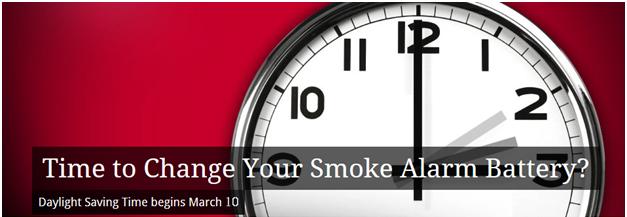
Time To Turn The Clocks One Hour Ahead!


It's almost time to spring ahead, which means it's also time to test and replace the batteries in your smoke detectors. Daylight Saving Time starts at 2 a.m. Sunday, March 10.

Is your smoke alarm still working? Smoke alarms must be maintained! A smoke alarm with a dead or missing battery is the same as having no smoke alarm at all.

Tioga Fire Protection and Fire Prevention would like to remind everyone to not only set their clocks ahead this weekend, but to also test your smoke detector batteries and change them if necessary.

A smoke alarm only works when it is properly installed and maintained. Depending on how your smoke alarm is powered (9-volt, 10-year lithium, or hardwired), you’ll have to maintain it according to manufacturer’s instructions.

Tioga Fire Protection and Fire Prevention says even hard-wired smoke alarms should have their batteries replaced and tested monthly.

A working smoke alarm doubles your chance of survival during a fire by giving you the critical time needed to escape.

A lot of fires occur at night while most people are sleeping.

Actually, the smoke and toxic gases from the fire can cause you to fall into a deeper sleep, diminishing the chance of survival.

Tioga Fire Protection and Fire Prevention recommends changing the batteries every six months and testing them monthly.


General guidelines for smoke alarm maintenance:

Smoke alarm powered by a 9-volt battery
Test the alarm monthly.
•Replace the batteries at least once per year.
•The entire smoke alarm unit should be replaced every 8-10 years.

Smoke alarm powered by a 10-year lithium (or “long life”) battery
Test the alarm monthly.
•Since you cannot (and should not) replace the lithium battery, the entire smoke alarm unit should be replaced according to manufacturer’s instructions.

Smoke alarm that is hardwired into the home’s electrical system
Test the alarm monthly.
•The backup battery should be replaced at least once per year.
•The entire smoke alarm unit should be replaced every 8-10 years.


A Sound You Can Live With: Test Your Smoke Detector!


(The usual disclaimers: I am not a journalist; This is a blog that expresses an outlook and is not conclusive in any shape or manner.)


Wednesday, October 3, 2012

Fire Prevention Week 2012 Just Around The Corner...


NEWS RELEASES

NFPA offers tools, tips and resources for October’s Fire Prevention Week

Campaign offers life-saving reminder to have an escape plan


Fire Prevention Week

The National Fire Protection Association’s (NFPA) annual awareness campaign, Fire Prevention Week, is slated for October 7-13. The non-profit fire safety organization is reminding the public to, ‘Have 2 Ways Out’, the theme for this year’s effort which focuses on the importance of having multiple escape routes in the event of a fire.

“Less than 25 percent of American households have developed and practiced a fire escape plan to be prepared in the event of a real emergency,” said Lorraine Carli, NFPA vice president of Communications. “Having a plan and knowing what to do can make the difference between getting out safely and quickly or not.”

The Fire Prevention Week website is the central portal for information and resources to help people from fire chiefs and community leaders running outreach programs, to parents teaching their families basic home fire safety information.

The site includes fire safety tip sheets, fire statistics, a family safety checklist, Sparky the Fire Dog® activities for kids and public service announcement videos.

Visitors can also test their knowledge of fire safety with the Fire Prevention Week Quiz, a great resource to see how well prepared families are for an emergency. Quiz-takers can review their results and compare them with others via Twitter and Facebook.

New for 2012, NFPA launched Sparky’s Wish List, designed to help fire departments connect with their local communities. Fire departments across the country have registered for public safety education materials they need in their communities. Individuals can then help their local fire department prepare for Fire Prevention Week by fulfilling the wishes.

NFPA offers these important fire safety tips:
  • Watch your cooking: Stay in the kitchen when you are frying, grilling, or broiling food. If you must leave, even for a short time, turn off the stove.
  • Give space heaters space: Keep fixed and portable space heaters at least three feet from anything that can burn. Turn off heaters when you leave the room or go to sleep.
  • Smoke outside: Ask smokers to smoke outside. Have sturdy, deep ashtrays for smokers.
  • Keep matches and lighters out of reach: Keep matches and lighters up high, out of the reach of children, preferably in a cabinet with a child lock.
  • Inspect electrical cords: Replace cords that are cracked, damaged, have broken plugs, or have loose connections.
  • Be careful when using candles: Keep candles at least one foot from anything that can burn. Blow out candles when you leave the room or go to sleep.
  • Have a home fire escape plan: Make a home fire escape plan and practice it at least twice a year.
  • Install smoke alarms: Install smoke alarms on every level of your home, inside bedrooms and outside sleeping areas. Interconnect smoke alarms throughout the home. When one sounds, they all sound.
  • Test smoke alarms: Test smoke alarms at least once a month and replace conventional batteries once a year or when the alarm “chirps” to tell you the battery is low. Replace any smoke alarm that is more than 10 years old.
  • Install sprinklers: If you are building or remodeling your home, install residential fire sprinklers. Sprinklers can contain and may even extinguish a fire in less time than it would take the fire department to arrive.
About Fire Prevention WeekNFPA has been the official sponsor of Fire Prevention Week since 1922. According to the National Archives and Records Administration's Library Information Center, Fire Prevention Week is the longest running public health and safety observance on record. The President of the United States has signed a proclamation proclaiming a national observance during that week every year since 1925. Visitwww.firepreventionweek.org for more safety information.


(The usual disclaimers: I am not a journalist; Th is is a blog that expresses an outlook and is not conclusive in any shape or manner.)


Tuesday, May 1, 2012

2012's Fire Prevention Week Theme...


2012 FPW

 Fire Prevention Week for 2012 will be held October 7th - 13th, and it's theme this for this year is "Have 2 ways out!"

In 2008, home fires killed 2,755 people and injured 13,160. Two of every five home fire deaths were in a home with no smoke alarms and another one in five was in a home where the smoke alarms were not working.

The reality is that when fire strikes, your home could be engulfed in smoke and flames in just a few minutes. 


How to Make a Fire Safety Plan -- powered by ehow


This year's theme aims to educate how it is important to have a home fire escape plan that prepares your family to think fast and get out quickly when the smoke alarm sounds. What if your first escape route is blocked by smoke or flames? That's why having two ways out is such a key part of your plan.

Having working smoke alarms can cut the chances of dying in a fire in half.

The theme will also focus on how to choose, install, and maintain smoke alarms.

NFPA has taken the lead in public fire safety outreach by serving as the official sponsor of Fire Prevention Week for 88 years.


The annual public awareness and safety commemoration, which is proclaimed by the President of the United States each year, is observed by fire departments in the U.S. and Canada to mark the anniversary of the Great Chicago Fire that occurred on October 8th 1871.

According to the National Archives and Records Administration's Library Information Center, Fire Prevention Week is the longest running public health and safety observance on record.

Fire Prevention Week is held every year durint the week of October 9th.

This year’s theme,“Have 2 Ways Out!”, focuses on the importance of fire escape planning and practice.


(The usual disclaimers: I am not a journalist; This is a blog that expresses an outlook and is not conclusive in any shape or manner.)


Sunday, March 11, 2012

Daylight Saving Time Is Here!


Ok now, I added an hour last night before going to bed for the arrival of Day Light Savings Time here in up-state New York. Is changing the clock worth all the fuss? Good question for discussion and in the following YouTube video explains what adding that hour all means...


We're only saving $4.00 a year per household by doing the Day Light Saving Time Thing! Wow! Well...the thing is though...I do know checking and test smoke detectors and CO2 alarms and changing their batteries with new/fresh ones is worth it because these early warning systems could and have saved lives!


Now is the time to check your skoke alarms and CO2 detectors. It is encouraged to make sure your smoke detectors and CO2 alarms are operating properly by changing the batteries at least once a year. Like now, change those batteries with new one! The best way to make sure the device is working is to push the “test” button until the alarm sounds. Test monthly throughout the year.

Smoke detectors that are properly installed and maintained play a vital role in reducing fire deaths and injuries. In addition, families should prepare an emergency escape plan to allow all members to practice what they should do and where they should meet outside the home in the event of a fire.

Here are a few more YouTube videos explaining where to install smoke alarms/detectors, as well as how to perform a monthly smoke detector test...


Here are some easy fire safety tips to remember and use throughout the year:

Safety tips provided by FASNY & National Fire Protection Association:

• Test smoke alarms/detectors at least once a month by using detectors’ "test button.”

• Clean the units by vacuuming or dusting in accordance with the manufacturer's instructions.

• Install new batteries in all smoke alarms/CO detectors at least once a year on the day you change your clocks in the spring and fall.

• Install a smoke alarm and CO detector near sleeping areas, as well on every level of the home, including the basement.

• Do not paint smoke alarm/CO detectors.

• Because smoke rises, alarms should be mounted high on walls or ceilings.

• Smoke alarms/CO detectors should not be installed near a window, door or forced-air register where drafts could interfere with their operation.

• Notify your local fire department when your detector sounds. However, before calling, make sure to identify whether or not the device is simply sounding due to a low battery.

• Read the detector’s packaging and instructions to understand the difference between a true emergency and a simple maintenance issue of a dead battery or an expired detector, as the detector may emit different sounds for each situation.

• If it is a real activation, call 911 and evacuate immediately.

• To avoid potential CO exposure, do not warm a vehicle in an enclosed garage space. During and after a snowstorm, make sure all vents connected to stoves, furnaces, and fireplaces leading outside are clear.


A Sound You Can Live With: Test Your Smoke Detector!


(The usual disclaimers: I am not a journalist; This is a blog that expresses an outlook and is not conclusive in any shape or manner.)

Monday, February 27, 2012

Unattended cooking remains one of the leading cause of U.S. home fires


Leaving an unattended pan or skillet cooking on the stove is a good way to burn your food, not to mention the chance of burning down your house.

According to the National Fire Protection Association (NFPA) cooking fires are the #1 cause of home* fires and home fire injuries. Two-thirds (66%) of home cooking fire started with the ignition of food or other cooking materials. Further more according to U.S. Consumer Product Safety Commission (CPSC) statistics, almost 30 percent of all reported home fires start in the kitchen, and of those, most involve the range-top.

Basic cooking fire prevention and fire safety mesures are very simple and easy to do and can prevent a cooking situation from becoming a far worse outcome. Just remember, practice and use these Cooking Fire Safety Tips ...

* Always use cooking equipment tested and approved by a recognized testing facility.

* Never leave cooking food on the stovetop unattended, and keep a close eye on food cooking inside the oven.

* Keep cooking areas clean and clear of combustibles (e.g. potholders, towels, rags, drapes and food packaging).

* Keep children and pets away from cooking areas by creating a three-foot (one-meter) "kid–free zone" around the stove.

* Turn pot handles inward so they can't be bumped and children can't grab them.

* Wear short, close fitting or tightly rolled sleeves when cooking. Loose clothing can dangle onto stove burners and catch fire.

* Never use a wet oven mitt, as it presents a scald danger if the moisture in the mitt is heated.

* Always keep a potholder, oven mitt and lid handy. If a small grease fire starts in a pan, put on an oven mitt and smother the flames by carefully sliding the lid over the pan. Turn off the burner.

* Never pour water on a grease fire and never discharge a fire extinguisher onto a pan fire, as it can spray or shoot burning grease around the kitchen, actually spreading the fire.

* If there is an oven fire, turn off the heat and keep the door closed to prevent flames from burning you and your clothing.

* There is a microwave fire, keep the door closed and unplug the microwave. Call the fire department and make sure to have the oven serviced before you use it again.

* Food cooked in a microwave can be dangerously hot. Remove the lids or other coverings from microwaved food carefully to prevent steam burns.

Fire can ripped through a home after a unattended cooking fire gets started. Such was the case in Lehigh Acres, Florida when the Lehigh Acres Fire Rescue responded to combat a structure fire at 2706 13th Street SW at 1325 hours on 2/24/12. The cause of the fire was unattended cooking. The family told firefighters that around 1:30 p.m., they left their home after cooking and forgot to turn the stove off. Here's news footage of this fire and video footage of the firefighters fighting the blaze...


Remember, Prevent Fires! It's Your Job!


(The usual disclaimers: I am not a journalist; This is a blog that expresses an outlook and is not conclusive in any shape or manner.)


Tuesday, November 22, 2011

Fire Safe Cooking Holiday Season

This week, on Thursday, is Thanksgiving Day with the holiday cooking starting across the country as well as marking the start to the holiday season. It is also a time to be reminded and encourage while cooking to take extra precautions and fire safety measures to prevent any kitchen fires from starting. It is hope that this Thanksgiving will be as safe as it was last year.

Fire statistics show that firefighters have responded to a number of kitchen fires each Holiday Season in years past. It is often the case that while the holiday meal is being put together the cook’s attention is diverted from the cooking thus raising the risk of a fire to start. The extra people in the home while the holiday meal is cooking can add to the confusion with the chance of the cook leaving something on the stove too long. The next thing you know, you have a kitchen fire.

DON’T BE A FIRE STATISTIC!

Turkey Fryers are often the source of cooking-related fires when they are used to prepare a holiday season meal. From YouTube® here’s a very important example of what could happen if a turkey fryer is used improperly:

U.S. fire departments are responding to more than 1,000 fires each year when a deep fryer is involved. The National Fire Association says deep fryers fires can result in more than $15 million in property damage each year and hot oil splatter can cause serious burns to an adult or life-threatening to a child.

Using turkey fryers this year to cook a turkey you most take several fire safety steps to insure their safety. Always use the turkey fryer outside and NOT in the garage or house. Make sure the turkey is completely defrosted and dried off before putting in the hot oil. Forgetting to simply drying off the turkey will result in the stating of hot oil splashing and then things begin to catch fire. The BIGGEST DANGER when using the turkey deep-fryer is when it’s not thawed or dried correctly, which can cause the grease or hot oil to splash or thaw. The YouTube® Turkey Fryer Fire Demonstration, presented by William Shatner & State Farm® demonstrated and showed the result of not following proper, very simple, fire safety precautions.

A full charged fire extinguisher should be kept near the door of the kitchen as well as near where you are using the turkey fryer outside. The fire extinguisher is to be used to fight small fires, when they are just started, and one should always escape from the fire area if the fire gets out of had where it cannot be put out with portable fire extinguish. When there is a fire, don’t hesitate to call 911, and call before fighting the fire or have someone call when you are using the fire extinguisher.

As the popularity of turkey fryers increase, more people are at risk for injury or property damage as information from State Farms Insurance states.

Fire Safety does not stop just because it’s the holiday season, and we need to keep this in mind as we celebrating. Remember that one of the leading causes of home fires is unattended cooking. When you are cooking, stay in the kitchen, stay with that turkey fryer. If you have to leave, for whatever reason, make sure you turn the appliance off. If there’s a pot on the stove, move it from one heat element after turning element off to another cooler element. If you ever have a pot of grease or hot oil catch fire, cover it with a lid, turn off the switch to it, and NEVER NEVER put a grease/hot oil fire with water as that will result only making a bad fire into a worse fire.

A little extra attention during the hectic holiday season goes a long way to keeping family and guests fire safe.

(The usual disclaimers: I am not a journalist; This is a blog that expresses an outlook and is not conclusive in any shape or manner.)

Wednesday, November 9, 2011

Thanksgiving is peak day for home cooking fires

NFPA urges caution when preparing holiday meals

November 9, 2011 – The number of home cooking fires on Thanksgiving Day was three times the national average of fires per day in 2009, according the National Fire Protection Association (NFPA.) NFPA is urging the public to keep fire safety in mind when preparing holiday meals.


“Thanksgiving can be a whirlwind of cooking and entertaining guests,” said Lorraine Carli, vice president of communications for NFPA. “With so much multitasking taking place, fire hazards around the oven or stovetop can easily be overlooked. Cooks should be conscious of fire safety this Thanksgiving whether the menu is meant to serve two or 20.”

Cooking fires are the number one cause of home fires and related injuries. In 2005-2009, U.S. fire departments responded to an estimated average of 155,400 home fires per year involving cooking equipment. These fires caused an annual average of 390 civilian deaths, 4,800 civilian injuries, and $771 million in direct property damage.

Thanksgiving safety tips
Download NFPA's Thanksgiving safety tips. (PDF, 868 KB)
To reduce the risk of cooking fires this holiday, NFPA recommends the following safety tips:
  1. Keep anything that can catch fire such as oven mitts, wooden utensils, food packaging, towels or curtains away from the stovetop.
  2. Always stay in the kitchen while frying, grilling, or broiling food. If you have to leave the kitchen for even a short period of time, turn off the stove.
  3. When simmering, baking, roasting, or boiling food, check it regularly, remain in the home while food is cooking, and use a timer to remind you that you are cooking.
  4. Stay alert. If you are sleepy or have consumed alcohol, don’t use the stove or stovetop.

If you have a cooking fire…

  1. Just get out! When you leave, close the door behind you to help contain the fire.
  2. Call 9-1-1 or the local emergency number after you leave.
  3. If you try to fight the fire, be sure others are getting out and you have a clear path (to your way out of the home and someone has called the fire department).
  4. Keep a lid nearby when cooking to smother small grease fires. Smother the fire by sliding the lid over the pan and turn off the stovetop. Leave the pan covered until it is completely cooled.
  5. For an oven fire, turn off the heat and keep the door closed.

About the National Fire Protection Association (NFPA)
NFPA is a worldwide leader in fire, electrical, building, and life safety. The mission of the international nonprofit organization founded in 1896 is to reduce the worldwide burden of fire and other hazards on the quality of life by providing and advocating consensus codes and standards, research, training, and education.


(The usual disclaimers: I am not a journalist; This is a blog that expresses an outlook and is not conclusive in any shape or manner.)

Wednesday, October 26, 2011

Time to Turn Back One Hour / Check Smoke & Carbon Monoxide Detectors


It is time to reset your clocks! This year, Daylight Savings Time officially ends on Sunday, November 6, 2011 when clocks are set back one hour at 2:00 a.m.

After turning the clocks back one hour, spend part of the hour gained to change the batteries in smoke and carbon monoxide detectors in the home.

Test those smoke and carbon monoxide detectors also for that monthly test.


In 2010, there were 1,331,500 fires, resulting in 3,120 deaths and 17,720 injuries, according to the U.S. Fire Administration

The USFA notes, "One of the best ways to protect yourself and your family is to have a working smoke alarm that can sound fast for both a fire that has flames, and a smoky fire that has fumes without flames. It is called a ‘Dual Sensor Smoke Alarm.’ A smoke alarm greatly reduces your chances of dying in a fire."


The recommendation is to install the alarms everywhere they are needed and to keep them maintained. At the very least, there should be a smoke detector outside each sleeping area and on every level of the home, including the basement. Good places for alarms are near dens, living rooms, and family rooms.

As a minimum, one smoke detector is required on each level of the home, including the basement. One smoke detector must be outside the bedrooms. If the home has bedrooms on more than one level, one smoke detector is required outside of each area.

Keep detectors away from windows, doors, or forced air registers.

Detectors should be tested at least monthly, and if you can do so check them weekly by following the manufacturer’s instructions. Replace any smoke detectors in the home that are 8 to 10 years old with new ones. Batteries should be changed twice a year and it has become common practice to do this when we change the clocks to daylight savings time and then back to standard time, which occurs this Nov. 6.

It simple, the only good smoke detector is one that works. BEEP-BEEP-BEEP A Sound You Can Live With! Learn Not To Burn, Be Fire Safe!


(The usual disclaimers: I am not a journalist; This is a blog that expresses an outlook and is not conclusive in any shape or manner.)


Search The Internet