

Showing posts with label Fire Prevention. Show all posts
Showing posts with label Fire Prevention. Show all posts
Saturday, March 16, 2019
Thursday, October 10, 2013
Putting A Lid On Cooking Fires - FPW 2013

Kitchen fires due to cooking oil or grease igniting into flames cause the fastest-spreading and most destructive type of residential fire. It's a statistic that may be surprising: two out of every five fires start in the kitchen.
In hopes of stomping out the growing trend, National Fire Prevention Week is focusing on the kitchen.
It is hope that people won’t have to learn the hard way. If just one fire warning could be given, it could be, “Keep an eye on what you fry!”
Why? Because cooking is the leading cause of home fires, according to the National Fire Protection Association (NFPA). The latest statistics from NFPA say U.S. Fire Departments responded to an estimated annual average of 156,600 cooking-related fires between 2007 and 2011.
This year’s Fire Prevention Week theme is “Prevent Kitchen Fires,” a reminder that leaving cooking unattended and other unsafe kitchen practices are a recipe for disaster.
Often when the local fire departments & firefighters are called to a cooking-related fire, the residents usally tells them that they only left the kitchen for a few minutes. Sadly, that’s all it takes for a dangerous fire to start. The bottom line is that there’s really no safe period of time for the cook to step away from a hot stove.
Some key points to remember:
• Stay in the kitchen when you are frying, grilling, or broiling food. If you must leave the room even for a short period of time, turn off the stove.
• When you are simmering, baking, or roasting food, check it regularly, stay in the home, and use a timer to remind you.
• Keep cooking areas clean and clear of combustibles (e.g. potholders, towels, rags, drapes, and food packaging).
• Keep children away from cooking areas by enforcing a “kid-free zone” of three feet around the stove.
• If you have a fire in your microwave, turn it off immediately and keep the door closed. Never open the door until the fire is completely out. If in doubt, get out of the home and call the fire department.
• Always keep an oven mitt and a lid nearby. If a small grease fire starts in a pan, smother the flames by carefully sliding the lid over the pan. (Make sure you are wearing the oven mitt.) Turn off the burner. Do not move the pan. To keep the fire from restarting, do not remove the lid until it is completely cool.
• Never pour water on a grease fire. If the fire does not go out, get out of the home and call the fire department.
• If an oven fire starts, turn off the heat and keep the door closed. If the fire does not go out, get out of the home and call the fire department.
A cooking fire can quickly turn deadly. Firefighters have seen too many homes destroyed and people killed or injured by fires that could have been easily avoided.
“Prevent Kitchen Fires!”
(The usual disclaimers: I am not a journalist; this is a blog that expresses an outlook and is not conclusive in any shape or manner.)

Tuesday, October 8, 2013
Fire Prevention Week Focus on Kitchen Fire Safety Awareness

Oct. 6-12 is National Fire Prevention week, and this year's message is focused on preventing kitchen fires. More fires start in the kitchen than in any other part of the home and teaching residents how to keep cooking fires from starting in the first place is a key goal, according to the National Fire Protection Association (NFPA).
The Tioga Fire Protection and Fire Prevention blog reminds the public to be aware of fire dangers in the kitchen.
According to the nonprofit National Fire Protection Association (NFPA), two out of every five home fires and most home fire-related injuries are caused by unattended cooking,
Suggested are the following family safety checklist and Fire Safety tips that will help prevent a fire from starting in the kitchen or at home:
- Be alert! If you are sleepy or have consumed alcohol don’t use the stove or stovetop.
- Stay in the kitchen when you are frying, grilling, broiling, or boiling food. Keep an eye on what you fry! Stay in the kitchen while you are frying, grilling, or broiling food. If you leave the kitchen for even a short period of time, turn off the stove.
- If you must leave the room, even for a short period of time, turn off the stove.
- When you are simmering, baking, or roasting food, check it regularly, stay in the home, and while food is cooking, and use a timer to remind you that you are cooking.
- Have a "kid-free zone" of at least 3 feet around the stove by keeping children and pets away from the stove and areas where hot food or drink is prepared or carried. Use the stove's back burners whenever possible.
- When you cook, wear clothing with tight-fitting sleeves.
- Keep anything that can catch fire like potholders, oven mitts, wooden utensils, paper and plastic bags, towels, and anything else that can burn, away from your stovetop.
- Clean up food and grease from burners and stovetops.
National Fire Prevention Week lasts from Oct. 6 through Oct. 12.
"Prevent Kitchen Fires.”
(The usual disclaimers: I am not a journalist; this is a blog that expresses an outlook and is not conclusive in any shape or manner.)
Monday, October 7, 2013
This Week Is Fire Prevention Week 2013

Kitchen accidents focus of National Fire Prevention Week
It's National Fire Prevention Week throughout the country. This year's theme is "Preventing Kitchen Fires."
Be alert, stay in the kitchen and keep flammable items away from the stovetop-these cooking safety tips may seem like common sense but cooking fires are the leading cause of home fires and home injuries in the U.S..
"U.S. fire departments responded to an estimated annual average of 156,600 cooking-related fires between 2007-2011, resulting in 400 civilian deaths, 5,080 civilian injuries and $853 million in direct damage," according to the National Fire Protection Association.
Out of those cooking-related fires, unattended cooking was a factor in 34 percent of home cooking fires.
Because of those statistics, from Oct. 6 to Oct. 12 firefighters across the U.S. are taking the time to remind the public about how to prevent kitchen fires during the 88th annual National Fire Protection Association's Fire Prevention Week.
Cook with caution!
Stay in the kitchen while you are frying, grilling or broiling food. If you leave the kitchen for even a short period of time, turn off the stove.
If you have a cooking fire...
Just get out! When you leave, close the door behind you to help contain the fire
Call 911 after you leave.
For additional Fire Prevention Week information concerning & "Preventing Kitchen Fires"...
... Download a flyer of these NFPA safety tips on cooking
Fire Prevention Week is the longest running public health and safety observance on record. The President of the United States has signed a proclamation proclaiming a national observance during that week every year since 1925, according to the National Archives and Records.
(The usual disclaimers: I am not a journalist; this is a blog that expresses an outlook and is not conclusive in any shape or manner.)
Friday, March 8, 2013
Time To Turn The Clocks One Hour Ahead!
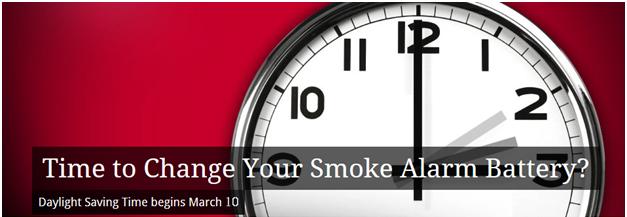
It's almost time to spring ahead, which means
it's also time to test and replace the batteries in your smoke detectors. Daylight Saving Time starts
at 2 a.m. Sunday, March 10.
Is
your smoke alarm still working? Smoke alarms must be maintained! A
smoke alarm with a dead or missing battery is the same as having no smoke alarm
at all.
Tioga Fire Protection and Fire Prevention
would like to remind everyone to not only set their clocks ahead this weekend,
but to also test your smoke detector batteries and change them if necessary.
A
smoke alarm only works when it is properly installed and maintained. Depending
on how your smoke alarm is powered (9-volt, 10-year lithium, or hardwired),
you’ll have to maintain it according to manufacturer’s instructions.
Tioga Fire Protection and Fire Prevention
says even hard-wired smoke alarms should have their batteries replaced and
tested monthly.
A working smoke alarm doubles your chance of
survival during a fire by giving you the critical time needed to escape.
A lot of fires occur at night while most people are sleeping.
Actually, the smoke and toxic gases from the fire can cause you to fall into a deeper sleep, diminishing the chance of survival.
Tioga Fire Protection and Fire Prevention recommends changing the batteries every six months and testing them monthly.
A lot of fires occur at night while most people are sleeping.
Actually, the smoke and toxic gases from the fire can cause you to fall into a deeper sleep, diminishing the chance of survival.
Tioga Fire Protection and Fire Prevention recommends changing the batteries every six months and testing them monthly.
General
guidelines for smoke alarm maintenance:
Smoke
alarm powered by a 9-volt battery
•Test the alarm monthly.
•Replace the batteries at least once per year.
•The entire smoke alarm unit should be replaced every 8-10 years.
•Test the alarm monthly.
•Replace the batteries at least once per year.
•The entire smoke alarm unit should be replaced every 8-10 years.
Smoke
alarm powered by a 10-year lithium (or “long life”) battery
•Test the alarm monthly.
•Since you cannot (and should not) replace the lithium battery, the entire smoke alarm unit should be replaced according to manufacturer’s instructions.
•Test the alarm monthly.
•Since you cannot (and should not) replace the lithium battery, the entire smoke alarm unit should be replaced according to manufacturer’s instructions.
Smoke
alarm that is hardwired into the home’s electrical system
•Test the alarm monthly.
•The backup battery should be replaced at least once per year.
•The entire smoke alarm unit should be replaced every 8-10 years.
•Test the alarm monthly.
•The backup battery should be replaced at least once per year.
•The entire smoke alarm unit should be replaced every 8-10 years.
A Sound You Can Live With: Test Your Smoke Detector!
(The usual disclaimers: I am not a journalist; This is a blog that expresses an outlook and is not conclusive in any shape or manner.)
Monday, December 17, 2012
Press The Button & Hear The BEEP!

Smoke Detectors and Smoke alarms do save lives when they are prepared to work properly. Ensuring that these first line of fire safety are ready to work. Perform a monthly check is a easy as pressing a button...
Having and knowing capabilities of all the different Smoke Detectors and Smoke Alarms that are on the market today becomes essential. Not all models of Smoke Detectors and Smoke Alarms are created equally. You need to be aware of the difference s in these devices to ensure you purchase and have the optimal fire safety protection...
Smoke alarms: Not all wake 'deep-sleeping' children
Officials urge smoke detector use in wake of deadly fire
A fire will quadruple in size as the time doubles. It's the smoke that's the killer not the fire. It is the gases that are in the smoke that are the killer. The importance of a Smoke Detector and Smoke Alarm is it's early warning. Anything that improves the chances to get out of a structure on fire is good.
So, each month take the time to "Press The Button & Hear The BEEP!" Be Fire Safe, Be Fire Wise, Learn Not To Burn!
(The usual disclaimers: I am not a journalist; This is a blog that expresses an outlook and is not conclusive in any shape or manner.)
Monday, October 22, 2012
"Have 2 Ways Out"

Fire Prevention Week 2012 has come and gone. But, this year's highlighted fire safety theme is something that everyone, young & old, should do as well as needs to practice through the year. Always "Have Two Ways Out!"
Can a fire happen in your home or where you work? Will you know what to do if a fire does happens? These are important questions to answer...a person or family member's life may depend on simply knowing and having two ways out when exiting a structure, be it your home, place of work, or where you shop when a fire occurs.
Most people believe a fire won't happen to them in their homes and they don't plan ahead. Since fires usually give only three to four minutes to escape safely, not knowing what to do can be deadly. Prepare a Home Fire Escape Escape Plan and have the entire family practice it.
- Plan two ways out of every room. Your normal exit may be blocked.
- Test emergency exits. Make sure you can open windows and remove screens and storm windows.
- Provide folding escape ladders from second story windows. Make them out of light rope or purchase metal ladders for escape.
- Practice using emergency exits in the dark and always be safe when practicing. Keep a flashlight next to every bed. Most fatal home fire start at night, while we are asleep and least likely to respond quickly.
- Install and maintain smoke detectors/smoke alarms on every level of the home. Test them monthly and change out the batteries twice a year. Once in the Spring and in the Fall.
- Teach the family to stay low in smoke to avoid poisonous gases. Crawl to exits. Most fire deaths that do happen occur due to smoke inhalation.
-Arrange a meeting place outside the home. Make sure everyone knows to get out quickly and go to the meeting place.
-Call the fire department from a neighbor's house. Do not wait in a burning building to use a phone. Get out and stay out if a fire is occurring in the home.

Plan Your Escape - Have Two Ways Out!
Be Fire Safe, Be Fire Wise, Learn Not To Burn!
(The usual disclaimers: I am not a journalist; This is a blog that expresses an outlook and is not conclusive in any shape or manner.)
Thursday, October 18, 2012
Key to Surviving Fires In The Home: Smoke Alarms & Escape Plan

During this past month's Fire Prevention Week, October 7-13, the Consumer Protection Safety Commission (CPSC) sent out a news release where along with the U.S. Fire Administration (USFA). Both agencies are providing new statistics on fire in American homes that urges consumers to install smoke alarms in there homes and check to make sure all smoke alarms are working properly. It is also vitally important to develop and practice a family fire escape plan.
In a report released, the CPSC estimates there were an average of 366,700 unintentional residential fires each year between 2008 and 2010.
The top cause of fires in the home is cooking equipment, accounting for an estimated 147,400 or 40 percent of residential 2008 and 2010. Cooking was also associated with the largest percentage of fire-related injuries, an estimated average 27.4 percent or 3,450 in the home.
Home heating and cooking equipment, including portable space heater, was a top cause of fire deaths, accounting for about nine or 210 deaths on average, in homes each year between 2008 and 2010. Portable heaters were associated with100 percent of those deaths each year.
"Six people die every day in home fires," said CPSC Chairman Inez Tenenbaum. "The early warning provided by smoke alarms can make a big difference. Consumers who have working smoke alarms in their homes die in fires at about half the rate of those who do not have alarms."
"Every second counts where there is a fire in you home," said U.S. Fire Administrator Ernie Mitchell. "It is easy to believe that when the smoke alarm sounds, you and your family will be able to escape. A home fire drill can prepare you and others to escape a real life emergency in your home."
CPSA and USFA recommended that every family have a working smoke alarm in their home. To provide better warning of a fire and more escape time, install more than one alarm and interconnect all smoke alarms in the home. Interconnected alarms speak to one another so if there is a fire in one part of the house, the interconnected alarms sound throughout the house and alert consumers to the fire more quickly.
For the best protection, CPSC and USFA recommend installing alarms on every level of the home, outside sleeping areas and inside each bedroom. Install both ionization and photoelectric alarms and made sure alarms are interconnected throughout the home. Alarms that are powered by house wiring should have battery backup.
According to the National Fire Protection Association (NFPA), the death rate per 100 reported fires was 49% less in homes with working smoke alarms than in homes without this protection. In addition to using alarms, never leave cooking items unattended and have a professional inspect heating and cooling equipment every year, including fireplaces and chimneys. Be extra careful with cigarettes and other smoking materials. Keep matches and lighters out of the reach of children.
According to USFA, the fire death rate dropped by 20 percent over the 10-year time period 2000 through 2009 on a per capita basis for a variety of reasons . CPSC and USFA are working to further reduce fires and fire deaths through education and standards work. CPSC staff is working with other federal agencies on new smoke alarm technology to improve effectiveness and reduce nuisance alarms. CPSC is also developing rule making at reducing upholstered furniture fires.
This year's Fire Prevention Week theme was "Have Two Ways Out!" It's not just a fire slogan for a week that highlights Fire Safety once a year, it's something that should be practice throughout the year!
Be Fire Safe - Be Fire Wise - Learn Not To Burn!
(The usual disclaimers: I am not a journalist; This is a blog that expresses an outlook and is not conclusive in any shape or manner.)
Wednesday, October 3, 2012
Fire Prevention Week 2012 Just Around The Corner...
NEWS RELEASES
NFPA offers tools, tips and resources for October’s Fire Prevention WeekCampaign offers life-saving reminder to have an escape plan

The National Fire Protection Association’s (NFPA) annual awareness campaign, Fire Prevention Week, is slated for October 7-13. The non-profit fire safety organization is reminding the public to, ‘Have 2 Ways Out’, the theme for this year’s effort which focuses on the importance of having multiple escape routes in the event of a fire.
“Less than 25 percent of American households have developed and practiced a fire escape plan to be prepared in the event of a real emergency,” said Lorraine Carli, NFPA vice president of Communications. “Having a plan and knowing what to do can make the difference between getting out safely and quickly or not.”
The Fire Prevention Week website is the central portal for information and resources to help people from fire chiefs and community leaders running outreach programs, to parents teaching their families basic home fire safety information.
Visitors can also test their knowledge of fire safety with the Fire Prevention Week Quiz, a great resource to see how well prepared families are for an emergency. Quiz-takers can review their results and compare them with others via Twitter and Facebook.
New for 2012, NFPA launched Sparky’s Wish List, designed to help fire departments connect with their local communities. Fire departments across the country have registered for public safety education materials they need in their communities. Individuals can then help their local fire department prepare for Fire Prevention Week by fulfilling the wishes.
NFPA offers these important fire safety tips:
- Watch your cooking: Stay in the kitchen when you are frying, grilling, or broiling food. If you must leave, even for a short time, turn off the stove.
- Give space heaters space: Keep fixed and portable space heaters at least three feet from anything that can burn. Turn off heaters when you leave the room or go to sleep.
- Smoke outside: Ask smokers to smoke outside. Have sturdy, deep ashtrays for smokers.
- Keep matches and lighters out of reach: Keep matches and lighters up high, out of the reach of children, preferably in a cabinet with a child lock.
- Inspect electrical cords: Replace cords that are cracked, damaged, have broken plugs, or have loose connections.
- Be careful when using candles: Keep candles at least one foot from anything that can burn. Blow out candles when you leave the room or go to sleep.
- Have a home fire escape plan: Make a home fire escape plan and practice it at least twice a year.
- Install smoke alarms: Install smoke alarms on every level of your home, inside bedrooms and outside sleeping areas. Interconnect smoke alarms throughout the home. When one sounds, they all sound.
- Test smoke alarms: Test smoke alarms at least once a month and replace conventional batteries once a year or when the alarm “chirps” to tell you the battery is low. Replace any smoke alarm that is more than 10 years old.
- Install sprinklers: If you are building or remodeling your home, install residential fire sprinklers. Sprinklers can contain and may even extinguish a fire in less time than it would take the fire department to arrive.
About Fire Prevention WeekNFPA has been the official sponsor of Fire Prevention Week since 1922. According to the National Archives and Records Administration's Library Information Center, Fire Prevention Week is the longest running public health and safety observance on record. The President of the United States has signed a proclamation proclaiming a national observance during that week every year since 1925. Visitwww.firepreventionweek.org for more safety information.
(The usual disclaimers: I am not a journalist; Th is is a blog that expresses an outlook and is not conclusive in any shape or manner.)
Monday, June 18, 2012
TFPFP PodCast/G+ Hangout On Air [06.18.2012]

I've tried a few traditional "Pod Casting" with audio which was ok but I was limited to the 5 minutes of time I had on for the platform I was using. Not really enough time plus something was missing. With the Google Plus Hang Out On Air capability that Google Plus now offers users I couldn't resist to give it another go but this time with visuals. I do need a newer & updated mic and I'll be working on that improvement here down the road.
I do think though with the limited online tools and hardware at the old PC desk that I did an ok performance for being still new to it all. It was fun to put the Hangout On Air/Pod Cast together and I should only get better when I do another one. Here is the show...
(The usual disclaimers: I am not a journalist; This is a blog that expresses an outlook and is not conclusive in any shape or manner.)
Wednesday, April 4, 2012
NFPA’s Sparky the Fire Dog® launches new “Put Out the Fire” online game on fire truck section of Sparky.org

The National Fire Protection Association’s (NFPA) most popular section on the Sparky the Fire Dog® website just got better! The fire truck section is now home to the new “Put Out the Fire” game. "Put Out the Fire" is a game of skill in which critical thinking is a must.
Fire truck image is available; please contact NFPA Public Affairs.
The new “All about fire trucks” section lets users get an inside look at different kinds of fire trucks and also explore parts of a quint truck with sound and animation.
The Fire Truck Arcade provides games for children of all ages. “Follow the Sounds,” a sound pattern game for preschoolers and school-aged children, reinforces listening and sequencing skills.
Crayons are optional for the “Color a Truck” section. Kids can use their imaginations and color scenes online with Sparky, firefighters and of course, fire trucks. Their finished works of art can even be printed. For those who prefer crayons, coloring sheets can also be found here.
“The Sparky the Fire Dog website allows kids to explore and learn about fire safety in a safe and interactive environment,” said Amy LeBeau, NFPA’s communications manager for public education. “The popular site already features sections for children of all ages, even providing voice-overs for younger children who cannot read yet. The diverse activities range from a cartoon section, family activities, seasonal Sparky e-cards for kids to send to friends and family, and parent and educator information.”
Visit the official website for Sparky the Fire Dog® for a safe learning environment for children and enormous family fun. The new fire truck section provides important information on fire trucks and fun activities for kids of all ages.
About Sparky the Fire Dog®
Sparky the Fire Dog was created for the National Fire Protection Association in 1951 and has been the organization’s official mascot andspokesdog ever since. He is a widely recognized fire safety icon that is beloved by children and adults alike. Millions have learned about fire safety through educational lessons and materials featuring his image and he is more active than ever today. Sparky frequently visits schools and participates in community events to spread fire safety messages, often accompanied by his firefighter friends. In addition to connecting with the public through public service announcements and his featured role in Fire Prevention Week campaigns each October, he has a very active website, and a Facebook page that was launched in 2011 as part of his 60th anniversary celebration. Sparky the Fire Dog® is a registered trademark of NFPA.
About the National Fire Protection Association (NFPA)
NFPA is a worldwide leader in fire, electrical, building, and life safety. The mission of the international nonprofit organization founded in 1896 is to reduce the worldwide burden of fire and other hazards on the quality of life by providing and advocating consensus codes and standards, research, training, and education.
(The usual disclaimers: I am not a journalist; This is a blog that expresses an outlook and is not conclusive in any shape or manner.)
Sunday, March 11, 2012
Daylight Saving Time Is Here!

Ok now, I added an hour last night before going to bed for the arrival of Day Light Savings Time here in up-state New York. Is changing the clock worth all the fuss? Good question for discussion and in the following YouTube video explains what adding that hour all means...
We're only saving $4.00 a year per household by doing the Day Light Saving Time Thing! Wow! Well...the thing is though...I do know checking and test smoke detectors and CO2 alarms and changing their batteries with new/fresh ones is worth it because these early warning systems could and have saved lives!
Now is the time to check your skoke alarms and CO2 detectors. It is encouraged to make sure your smoke detectors and CO2 alarms are operating properly by changing the batteries at least once a year. Like now, change those batteries with new one! The best way to make sure the device is working is to push the “test” button until the alarm sounds. Test monthly throughout the year.
Smoke detectors that are properly installed and maintained play a vital role in reducing fire deaths and injuries. In addition, families should prepare an emergency escape plan to allow all members to practice what they should do and where they should meet outside the home in the event of a fire.
Here are a few more YouTube videos explaining where to install smoke alarms/detectors, as well as how to perform a monthly smoke detector test...
Here are some easy fire safety tips to remember and use throughout the year:
Safety tips provided by FASNY & National Fire Protection Association:
• Test smoke alarms/detectors at least once a month by using detectors’ "test button.”
• Clean the units by vacuuming or dusting in accordance with the manufacturer's instructions.
• Install new batteries in all smoke alarms/CO detectors at least once a year on the day you change your clocks in the spring and fall.
• Install a smoke alarm and CO detector near sleeping areas, as well on every level of the home, including the basement.
• Do not paint smoke alarm/CO detectors.
• Because smoke rises, alarms should be mounted high on walls or ceilings.
• Smoke alarms/CO detectors should not be installed near a window, door or forced-air register where drafts could interfere with their operation.
• Notify your local fire department when your detector sounds. However, before calling, make sure to identify whether or not the device is simply sounding due to a low battery.
• Read the detector’s packaging and instructions to understand the difference between a true emergency and a simple maintenance issue of a dead battery or an expired detector, as the detector may emit different sounds for each situation.
• If it is a real activation, call 911 and evacuate immediately.
• To avoid potential CO exposure, do not warm a vehicle in an enclosed garage space. During and after a snowstorm, make sure all vents connected to stoves, furnaces, and fireplaces leading outside are clear.
• Test smoke alarms/detectors at least once a month by using detectors’ "test button.”
• Clean the units by vacuuming or dusting in accordance with the manufacturer's instructions.
• Install new batteries in all smoke alarms/CO detectors at least once a year on the day you change your clocks in the spring and fall.
• Install a smoke alarm and CO detector near sleeping areas, as well on every level of the home, including the basement.
• Do not paint smoke alarm/CO detectors.
• Because smoke rises, alarms should be mounted high on walls or ceilings.
• Smoke alarms/CO detectors should not be installed near a window, door or forced-air register where drafts could interfere with their operation.
• Notify your local fire department when your detector sounds. However, before calling, make sure to identify whether or not the device is simply sounding due to a low battery.
• Read the detector’s packaging and instructions to understand the difference between a true emergency and a simple maintenance issue of a dead battery or an expired detector, as the detector may emit different sounds for each situation.
• If it is a real activation, call 911 and evacuate immediately.
• To avoid potential CO exposure, do not warm a vehicle in an enclosed garage space. During and after a snowstorm, make sure all vents connected to stoves, furnaces, and fireplaces leading outside are clear.
A Sound You Can Live With: Test Your Smoke Detector!
(The usual disclaimers: I am not a journalist; This is a blog that expresses an outlook and is not conclusive in any shape or manner.)
Monday, February 27, 2012
Unattended cooking remains one of the leading cause of U.S. home fires


Leaving an unattended pan or skillet cooking on the stove is a good way to burn your food, not to mention the chance of burning down your house.
According to the National Fire Protection Association (NFPA) cooking fires are the #1 cause of home* fires and home fire injuries. Two-thirds (66%) of home cooking fire started with the ignition of food or other cooking materials. Further more according to U.S. Consumer Product Safety Commission (CPSC) statistics, almost 30 percent of all reported home fires start in the kitchen, and of those, most involve the range-top.
Basic cooking fire prevention and fire safety mesures are very simple and easy to do and can prevent a cooking situation from becoming a far worse outcome. Just remember, practice and use these Cooking Fire Safety Tips ...
* Always use cooking equipment tested and approved by a recognized testing facility.
* Never leave cooking food on the stovetop unattended, and keep a close eye on food cooking inside the oven.
* Keep cooking areas clean and clear of combustibles (e.g. potholders, towels, rags, drapes and food packaging).
* Keep children and pets away from cooking areas by creating a three-foot (one-meter) "kid–free zone" around the stove.
* Turn pot handles inward so they can't be bumped and children can't grab them.
* Wear short, close fitting or tightly rolled sleeves when cooking. Loose clothing can dangle onto stove burners and catch fire.
* Never use a wet oven mitt, as it presents a scald danger if the moisture in the mitt is heated.
* Always keep a potholder, oven mitt and lid handy. If a small grease fire starts in a pan, put on an oven mitt and smother the flames by carefully sliding the lid over the pan. Turn off the burner.
* Never pour water on a grease fire and never discharge a fire extinguisher onto a pan fire, as it can spray or shoot burning grease around the kitchen, actually spreading the fire.
* If there is an oven fire, turn off the heat and keep the door closed to prevent flames from burning you and your clothing.
* There is a microwave fire, keep the door closed and unplug the microwave. Call the fire department and make sure to have the oven serviced before you use it again.
* Food cooked in a microwave can be dangerously hot. Remove the lids or other coverings from microwaved food carefully to prevent steam burns.
Fire can ripped through a home after a unattended cooking fire gets started. Such was the case in Lehigh Acres, Florida when the Lehigh Acres Fire Rescue responded to combat a structure fire at 2706 13th Street SW at 1325 hours on 2/24/12. The cause of the fire was unattended cooking. The family told firefighters that around 1:30 p.m., they left their home after cooking and forgot to turn the stove off. Here's news footage of this fire and video footage of the firefighters fighting the blaze...
Remember, Prevent Fires! It's Your Job!
(The usual disclaimers: I am not a journalist; This is a blog that expresses an outlook and is not conclusive in any shape or manner.)
Friday, February 24, 2012
NFPA partners with LEGOLAND® Florida for fire safety education

Partnership will spread important safety messages for kids and families
(NFPA NEWS RELEASE) – Streamers flew and smoke alarms beeped as the National Fire Protection Association (NFPA) kicked off its long-term partnership with LEGOLAND® Florida to provide lifesaving information to families and kids during a press event and special fire safety day at central Florida’s newest theme park today.
“The majority of fire deaths happen in homes where there are no working smoke alarms,” said NFPA President Jim Shannon. “We are excited to join with LEGOLAND Florida to impart two extremely important messages - test your smoke alarms and have an escape plan.”
NFPA will sponsor the park’s fire safety - themed “The Big Test” live show at the LEGO® City Stage where these messages will be incorporated. “The Big Test” is an acrobatic, comedy show in which a cast of characters goes through a series of hysterical antics as they try to become firefighters. There will also be special activities throughout the year that stress the importance of fire safety and acknowledge the critical work of the fire service.
Video: See a preview of "The Big Test".
During the kick-off event, hundreds of kids and families tested smoke alarms, learned ways to stay safe and posed for pictures with area firefighters in full gear before sitting down to watch the highly acclaimed “The Big Test”.
“This partnership allows us to combine kids’ love of the fire service and LEGOLAND to build life-saving knowledge,” said Adrian Jones, LEGOLAND Florida general manager. “We are proud to play this important role for our community.”
About LEGOLAND Florida
LEGOLAND Florida opened on October 15, 2011 and is a 150-acre interactive theme park dedicated to families with children between the ages of 2 and 12. Located midway between Orlando and Tampa, just 45 minutes from either city center, the park features more than 50 rides, shows and attractions. There are currently four other LEGOLAND Parks in the world – LEGOLAND California in Carlsbad, LEGOLAND Billund in Denmark, LEGOLAND Deutschland near Günzburg, Germany and LEGOLAND Windsor outside of London. The LEGOLAND theme parks are a part of Merlin Entertainments Group, the second largest attractions operator in the world.
LEGOLAND Florida opened on October 15, 2011 and is a 150-acre interactive theme park dedicated to families with children between the ages of 2 and 12. Located midway between Orlando and Tampa, just 45 minutes from either city center, the park features more than 50 rides, shows and attractions. There are currently four other LEGOLAND Parks in the world – LEGOLAND California in Carlsbad, LEGOLAND Billund in Denmark, LEGOLAND Deutschland near Günzburg, Germany and LEGOLAND Windsor outside of London. The LEGOLAND theme parks are a part of Merlin Entertainments Group, the second largest attractions operator in the world.
About the National Fire Protection Association (NFPA)
NFPA is a worldwide leader in fire, electrical, building, and life safety. The mission of the international nonprofit organization founded in 1896 is to reduce the worldwide burden of fire and other hazards on the quality of life by providing and advocating consensus codes and standards, research, training, and education. For more information on this partnership, please visit www.nfpa.org/legoland.
NFPA is a worldwide leader in fire, electrical, building, and life safety. The mission of the international nonprofit organization founded in 1896 is to reduce the worldwide burden of fire and other hazards on the quality of life by providing and advocating consensus codes and standards, research, training, and education. For more information on this partnership, please visit www.nfpa.org/legoland.
(The usual disclaimers: I am not a journalist; This is a blog that expresses an outlook and is not conclusive in any shape or manner.)
Subscribe to:
Posts (Atom)